Karma
Karma concerns action and its consequences within moral, ritual, and metaphysical orders.
Short answer
Karma concerns action and its consequences within moral, ritual, and metaphysical orders.
Why it matters
Karma is best approached as a living philosophical tool rather than a dictionary label. It helps readers see how a problem, distinction, or tradition organizes arguments.
Example
A reader can use Karma to distinguish a surface-level slogan from the deeper philosophical issue underneath it.
Common confusion
Karma has one simple meaning in every context. Its meaning shifts across authors and traditions, so context matters.
Read this if
- You want a plain-English entry point into Karma.
- You need examples before moving into primary texts or specialist debates.
- You are mapping how Karma connects to nearby ideas in Indian philosophy.
Core tension
The concept looks simple as a label, but becomes clearer only when its contrasts and examples are visible.
Best for
Indian philosophy, comparative reading, essay planning, and concept mapping.
A useful way in
How can action, intention, consequence, and rebirth belong to one moral picture?
Start here
Use this page to distinguish karma from fate, luck, punishment, and simple cosmic bookkeeping.
Keep reading for
The important tension is how traditions connect moral responsibility with conditions beyond a single moment or lifetime.
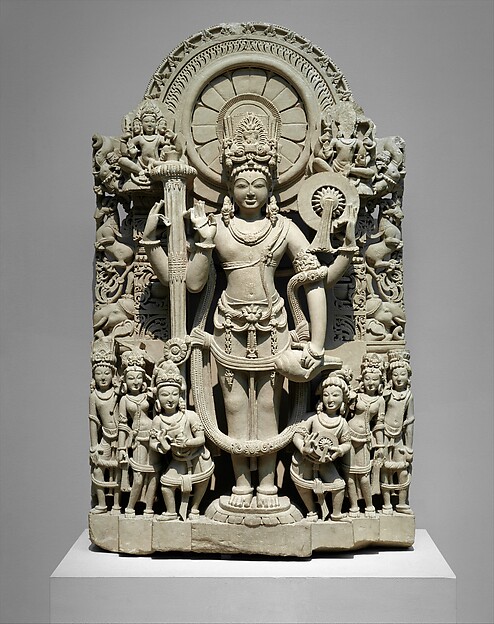
Start With The Human Problem
Karma names a cluster of ideas about action, consequence, and moral shaping that travel from South Asian religious traditions into global ethical conversation. At its clearest, karma links what agents do with what happens to them or to others, but it also frames questions about intention, responsibility, and where causation in moral life begins and ends. Readers often encounter karma as ethical instruction, metaphysical claim, or social critique. This entry treats karma as a living philosophical problem: a concept that prompts careful distinctions between causal law, moral assessment, and practical guidance for living well with others.
Definition
Karma concerns action and its consequences within moral, ritual, and metaphysical orders.
Why It Matters
Karma is best approached as a living philosophical tool rather than a dictionary label. It helps readers see how a problem, distinction, or tradition organizes arguments.
A careful reading of Karma requires attention to its historical setting, its rival interpretations, and the examples through which it becomes intelligible.
The concept matters because it connects abstract inquiry to recurring human questions about knowledge, value, reality, action, and meaning.
Historical Context
Karma emerged within ancient Indian thought, where Sanskrit texts use the term to speak of action (karman) and its fruits (phala). Early uses describe ritual acts and ethical deeds producing predictable results across lifetimes within doctrines of rebirth. Philosophers and religious teachers—Buddhist, Jain, and various Brahmanical schools—disagreed sharply about how to explain the mechanism by which deeds bear fruit, whether through a persisting self, a stream of events, or impersonal moral law.
Over centuries, doctrinal debates refined karma into several models. In classical Hindu accounts, ritual and moral actions bind the self to cycles of birth and death, remedied by purification and liberation. Early Buddhism rejected an enduring soul and instead described karmic causation through conditioned continuities of consciousness. Jainism emphasized intention and the literal accumulation of karmic matter. Each tradition thus balanced metaphysics, ethics, and practice in distinct ways while keeping action and its consequences central.
From the modern period onward, karma migrated into new contexts by translation, reform, and critique. Colonial encounters and global exchange reinterpreted it as a moral law akin to cause-and-effect or as a cultural explanation for social inequality. Contemporary philosophers study karma both historically and normatively: as a doctrinal system with metaphysical claims and as a practical framework for thinking about responsibility, collective harm, and moral repair in plural societies.
Why Keep Reading
Debate Map
Karma as metaphysical law
This view treats karma like a natural principle connecting actions to results across lives or within a single life. Proponents argue that moral causation must be systematic to explain moral order and retributive intuitions. Critics question whether such a law requires unseen mechanisms, clash with empirical science, or risk endorsing fatalism by attributing current suffering solely to past deeds.
Karma as ethical heuristic
On this account, karma functions as a normative guide rather than a metaphysical fact. It encourages morally attentive behavior by linking conduct and consequence in practical terms. Supporters emphasize responsibility and reform; opponents worry this instrumental use can moralize suffering or excuse structural injustice when outcomes are attributed primarily to individual actions.
How To Read This Concept Closely
Begin with the simplest analytic move: separate action, intention, and consequence. Many debates collapse because they conflate performing an act with the motive behind it and with the resulting state of affairs. A clear reading distinguishes moral agency (what an agent does), mental states (why they act), and causal effects (what happens). This partition helps address puzzles about blameworthiness: when is someone morally responsible for outcomes they did not intend or foresee?
Next, examine temporal scope. Classical doctrines posit consequences that may unfold across lifetimes; modern adaptations usually situate effects within a single biography or social system. Philosophically, extending consequences across time raises questions about identity: what connects the earlier agent to the later subject who experiences the result? If the self is not a simple enduring substance, we must explain continuity without invoking a metaphysical core.
Finally, consider collective and structural readings. Karma need not name only individual deserts; it can describe patterns by which groups experience consequences of systemic actions. Reading karma this way shifts focus from individual moral accounting to feedback loops—economic practices, institutional harms, or cultural habits that produce enduring effects. That perspective preserves concerns about responsibility while directing attention to reforming systems rather than blaming isolated agents.
How This Concept Works In Arguments
How This Concept Does Work
Karma is useful because it does more than name a topic. It gives a reader a way to sort examples, test claims, and notice where an argument is changing levels. In Indian philosophy, the term often marks a pressure point: one side treats the issue as a matter of definition, another side treats it as a problem of practice, and a third side asks what the concept hides when it is used too quickly.
A strong reading therefore asks what the concept explains, what it leaves unresolved, and which neighboring concepts it needs. On this page those neighbors include Rebirth, Dharma, and Liberation. Reading them together prevents Karma from becoming an isolated label. It becomes part of a network of distinctions that can support essays, classroom discussion, and slower interpretation of primary texts.
How To Use It In An Argument
When you use Karma in an argument, begin by naming the problem it is meant to solve. Then ask whether the concept is being used descriptively, normatively, historically, or comparatively. This simple check keeps the discussion from sliding between different claims. It also helps explain why two writers may use similar language while disagreeing about what follows from it.
The safest essay move is to connect the definition to a concrete contrast. A paragraph can state the definition, show an example, introduce a misconception, and then compare Karma with one related idea. That pattern gives the reader enough structure to follow the argument without reducing the concept to a slogan or a dictionary sentence.
What To Notice In Sources
The sources for this page are not decoration. They show which institutions, reference works, and primary traditions make the concept stable enough to cite. Start with Stanford University, University of Tennessee at Martin, and OpenStax, then ask how each source frames the problem: as a historical development, a live debate, a textual interpretation, or a practical distinction. The differences between sources often reveal the concept's real shape.
When Buddha, and Shankara appear in connection with Karma, read them for the question they are answering, not only for a quotable sentence. Philosophical terms change meaning as they move across texts and problems. A careful reader tracks that movement and asks why this term, rather than a simpler one, became necessary.
A final source check is to ask what would count as misuse. If a source treats Karma as a technical term, the reader should not use it as a loose mood word. If a source treats it as a family of debates, the reader should name the debate rather than forcing one settled meaning too quickly.
Study Prompts
- 01What problem becomes harder to see if Karma is removed from the discussion?
- 02Which related concept most sharply changes how Karma should be read?
- 03Where does an example support the definition, and where does it strain it?
Key Questions
- 01What problem does Karma try to clarify?
- 02Which thinkers and traditions shaped Karma?
- 03How does Karma change the way readers understand philosophy?
Examples
- A reader can use Karma to distinguish a surface-level slogan from the deeper philosophical issue underneath it.
- In discussion, Karma helps connect an everyday problem to a tradition of argument rather than treating it as mere opinion.
Common Misconceptions
Karma has one simple meaning in every context.
Its meaning shifts across authors and traditions, so context matters.
Karma is only a historical term.
It remains useful because the problem it names still appears in contemporary debates.
Karma can be understood without related concepts.
It becomes clearer when placed beside neighboring and contrasting ideas.
FAQ
Why is Karma important?
It gives readers a stable entry point into a broader philosophical debate.
How should beginners read about Karma?
Begin with a concise definition, then compare examples, related concepts, and the main thinkers associated with it.
Suggested Reading Path
- Step 1
Compare primary texts
Read short selections from Hindu, Buddhist, and Jain sources to see how each tradition frames action, intention, and consequence. Direct comparison highlights distinct metaphysical commitments and clarifies why identical words support different ethical practices.
- Step 2
Apply to a contemporary case
Take a concrete moral problem—say, economic inequality or environmental harm—and test how metaphysical, heuristic, and systemic readings of karma would explain responsibility and suggest remedies. This practice reveals practical stakes and limits of each interpretation.
Questions To Think With
- When does explaining suffering by appeal to past actions help, and when does it obscure social causes?
- How should we weigh intention versus outcome in assigning praise or blame?
- Can a concept like karma be meaningful without commitment to rebirth or an enduring self?
- Does viewing consequences as regular moral law risk fatalism, and how could that be resisted?
- How might collective responsibility look if reframed through karmic-style causal thinking?
Where To Go Next
Sources
- Stanford Encyclopedia of Philosophy - KarmaStanford University - plato.stanford.edu
- Internet Encyclopedia of Philosophy - KarmaUniversity of Tennessee at Martin - iep.utm.edu
- OpenStax - Classical Indian PhilosophyOpenStax - openstax.org