Skillful Means
Skillful means names adaptive teaching and practice, where methods are judged by their capacity to lead beings toward liberation.
Short answer
Skillful means names adaptive teaching and practice, where methods are judged by their capacity to lead beings toward liberation.
Why it matters
Skillful Means is best approached as a living philosophical tool rather than a dictionary label. It helps readers see how a problem, distinction, or tradition organizes arguments.
Example
A reader can use Skillful Means to distinguish a surface-level slogan from the deeper philosophical issue underneath it.
Common confusion
Skillful Means has one simple meaning in every context. Its meaning shifts across authors and traditions, so context matters.
Read this if
- You want a plain-English entry point into Skillful Means.
- You need examples before moving into primary texts or specialist debates.
- You are mapping how Skillful Means connects to nearby ideas in Chinese Buddhism.
Core tension
The concept looks simple as a label, but becomes clearer only when its contrasts and examples are visible.
Best for
Chinese Buddhism, comparative reading, essay planning, and concept mapping.
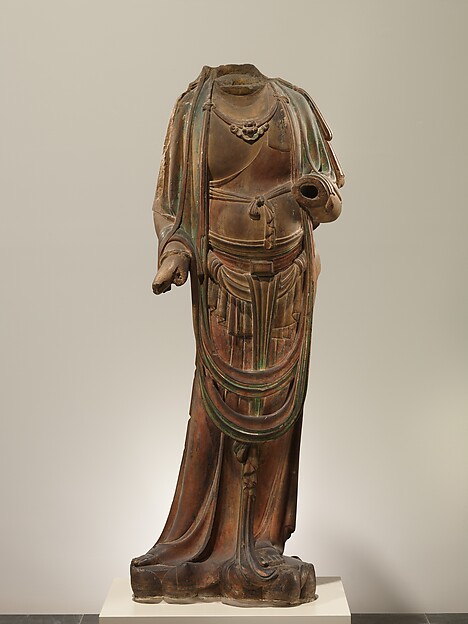
Start With The Human Problem
Skillful Means becomes useful when a reader notices that Chinese philosophy rarely separates personal cultivation, language, family, statecraft, cosmology, and practice into sealed compartments. A teaching that helps one person may confuse another, so wisdom must adapt without becoming manipulative. The concept gives that problem a shape: it asks how a person can read a situation, form character, respond without distortion, and belong to a larger order without losing moral attention. Good reading starts with the ordinary pressure, then follows how the classical vocabulary turns that pressure into disciplined reflection.
Definition
Skillful means names adaptive teaching and practice, where methods are judged by their capacity to lead beings toward liberation.
Why It Matters
Skillful Means is best approached as a living philosophical tool rather than a dictionary label. It helps readers see how a problem, distinction, or tradition organizes arguments.
A careful reading of Skillful Means requires attention to its historical setting, its rival interpretations, and the examples through which it becomes intelligible.
The concept matters because it connects abstract inquiry to recurring human questions about knowledge, value, reality, action, and meaning.
Historical Context
Skillful means, or upaya, is central in Mahayana Buddhism and shaped Chinese readings of teaching, practice, parable, and compassionate adaptation. Early Chinese texts often teach by aphorism, dialogue, analogy, and exemplary scene rather than by a single abstract definition. That matters for Skillful Means: the concept is usually tested in concrete roles, disputed interpretations, and cases of speech, ritual, rule, training, or awakening. Its history is not a straight line from one definition to another. It is a record of how teachers, rulers, commentators, monks, and readers used a term to diagnose disorder and describe a better way of living.
Across the Warring States, Han, Tang, Song, Ming, and later periods, Skillful Means was read through changing institutions. Court debates, ritual life, monastic communities, family ethics, examination learning, commentarial traditions, and encounters among Confucian, Daoist, and Buddhist lineages all affected the term. A reader should therefore ask what kind of problem the text is solving: moral formation, political order, self-cultivation, metaphysical explanation, translation, meditation, or liberation. The same word can carry different force when moved from a maxim to a commentary, from a court memorial to a meditation manual, or from a family practice to a cosmological claim.
Modern readers meet Skillful Means through translation, comparative philosophy, and the need to avoid flattening Chinese thought into familiar European categories. Translators must decide whether to preserve pinyin, use an English approximation, or explain the term through examples. Each choice helps and distorts. Keeping the historical setting visible lets the concept remain usable without making it vague. It also lets readers compare Chinese philosophy with Greek virtue ethics, Buddhist liberation, political theory, philosophy of language, and contemporary debates about ethical formation without pretending the traditions ask every question in the same way.
Why Keep Reading
Debate Map
Skillful means as compassionate adaptation
This view stresses that teachings are tools for liberation. Flexibility becomes a virtue. Critics ask how to prevent abuse when teachers claim unusual methods are helpful.
Skillful means as provisional truth
This view links methods to two truths and staged teaching. A doctrine may be provisionally useful without being ultimate. The challenge is preserving trust while admitting provisionality.
How To Read This Concept Closely
When reading Skillful Means, watch the scene before the definition. Classical Chinese and Chinese Buddhist texts often place a term inside a brief exchange, a role relation, a ritual act, a political failure, or a teaching device. The surrounding scene tells the reader whether the concept is being used to correct speech, direct conduct, explain transformation, or expose attachment. Ask who the teaching is for, what attachment it addresses, and what liberation-oriented outcome it seeks. A careful reader asks what kind of disorder the concept answers before asking for a compact formula.
Pay attention to translation. Some English renderings are helpful for quick orientation, but they can hide the range of the original term. A pinyin title may preserve ambiguity; an English title may make the page easier to enter; a Chinese character can show that two apparently different ideas share a textual root. The best reading usually keeps all three levels in view: the public English explanation, the pinyin or doctrinal term, and the example that shows why the distinction matters. This is especially important when Skillful Means moves between ethics, metaphysics, language, and practice.
Finally, test the concept with a case. Ask how Skillful Means would read a ruler who speaks well but governs badly, a family duty that protects care but risks hierarchy, a spontaneous action that may be wisdom or impulse, or a meditation practice that may free attention or become another technique of self-control. These cases reveal whether the concept is being used as description, norm, method, or critique. They also prepare the reader for comparison pages, where the real work is not choosing a winner but seeing what each concept can notice.
How This Concept Works In Arguments
How This Concept Does Work
Skillful Means is useful because it does more than name a topic. It gives a reader a way to sort examples, test claims, and notice where an argument is changing levels. In Chinese Buddhism, the term often marks a pressure point: one side treats the issue as a matter of definition, another side treats it as a problem of practice, and a third side asks what the concept hides when it is used too quickly.
A strong reading therefore asks what the concept explains, what it leaves unresolved, and which neighboring concepts it needs. On this page those neighbors include Two Truths, Pure Land, and Gradual Cultivation. Reading them together prevents Skillful Means from becoming an isolated label. It becomes part of a network of distinctions that can support essays, classroom discussion, and slower interpretation of primary texts.
How To Use It In An Argument
When you use Skillful Means in an argument, begin by naming the problem it is meant to solve. Then ask whether the concept is being used descriptively, normatively, historically, or comparatively. This simple check keeps the discussion from sliding between different claims. It also helps explain why two writers may use similar language while disagreeing about what follows from it.
The safest essay move is to connect the definition to a concrete contrast. A paragraph can state the definition, show an example, introduce a misconception, and then compare Skillful Means with one related idea. That pattern gives the reader enough structure to follow the argument without reducing the concept to a slogan or a dictionary sentence.
What To Notice In Sources
The sources for this page are not decoration. They show which institutions, reference works, and primary traditions make the concept stable enough to cite. Start with Stanford University, Stanford University, and Stanford University, then ask how each source frames the problem: as a historical development, a live debate, a textual interpretation, or a practical distinction. The differences between sources often reveal the concept's real shape.
When Buddha, Zhiyi, and Shandao appear in connection with Skillful Means, read them for the question they are answering, not only for a quotable sentence. Philosophical terms change meaning as they move across texts and problems. A careful reader tracks that movement and asks why this term, rather than a simpler one, became necessary.
A final source check is to ask what would count as misuse. If a source treats Skillful Means as a technical term, the reader should not use it as a loose mood word. If a source treats it as a family of debates, the reader should name the debate rather than forcing one settled meaning too quickly.
Study Prompts
- 01What problem becomes harder to see if Skillful Means is removed from the discussion?
- 02Which related concept most sharply changes how Skillful Means should be read?
- 03Where does an example support the definition, and where does it strain it?
Key Questions
- 01What problem does Skillful Means try to clarify?
- 02Which thinkers and traditions shaped Skillful Means?
- 03How does Skillful Means change the way readers understand philosophy?
Examples
- A reader can use Skillful Means to distinguish a surface-level slogan from the deeper philosophical issue underneath it.
- In discussion, Skillful Means helps connect an everyday problem to a tradition of argument rather than treating it as mere opinion.
Common Misconceptions
Skillful Means has one simple meaning in every context.
Its meaning shifts across authors and traditions, so context matters.
Skillful Means is only a historical term.
It remains useful because the problem it names still appears in contemporary debates.
Skillful Means can be understood without related concepts.
It becomes clearer when placed beside neighboring and contrasting ideas.
FAQ
Why is Skillful Means important?
It gives readers a stable entry point into a broader philosophical debate.
How should beginners read about Skillful Means?
Begin with a concise definition, then compare examples, related concepts, and the main thinkers associated with it.
Suggested Reading Path
- Step 1
Start with the problem Skillful Means names
Before memorizing translations, identify the practical pressure: A teaching that helps one person may confuse another, so wisdom must adapt without becoming manipulative. This keeps the concept attached to a real reader question.
- Step 2
Read it beside two neighbors
Compare Skillful Means with the closest related concepts in the cluster. The contrast will usually clarify whether the term concerns virtue, pattern, language, political order, cosmology, or liberation.
- Step 3
Apply it to one concrete scene
Use a family relation, court decision, meditation instruction, ritual act, or dispute over names. The concept becomes clearer when it has to interpret a situation rather than float as a definition.
Questions To Think With
- What problem becomes visible only after Skillful Means is separated from its nearest English translation?
- Does Skillful Means name an inner disposition, a public practice, a pattern of reality, a method of training, or more than one of these?
- Which related concept most changes the meaning of Skillful Means when the two are read together?
- How would a critic misuse Skillful Means, and what safeguard does the tradition offer against that misuse?
- What contemporary example would make Skillful Means intellectually useful without turning it into a slogan?
Where To Go Next
Sources
- Stanford Encyclopedia of Philosophy - Huayan BuddhismStanford University - plato.stanford.edu
- Stanford Encyclopedia of Philosophy - Tiantai BuddhismStanford University - plato.stanford.edu
- Stanford Encyclopedia of Philosophy - BuddhaStanford University - plato.stanford.edu
- Internet Encyclopedia of Philosophy - BuddhismUniversity of Tennessee at Martin - iep.utm.edu
- Chinese Text ProjectChinese Text Project - ctext.org