Stoicism
Stoicism teaches that freedom and flourishing depend on living according to reason and distinguishing what is up to us from what is not.
Short answer
Stoicism teaches that freedom and flourishing depend on living according to reason and distinguishing what is up to us from what is not.
Why it matters
Stoicism is best approached as a living philosophical tool rather than a dictionary label. It helps readers see how a problem, distinction, or tradition organizes arguments.
Example
A reader can use Stoicism to distinguish a surface-level slogan from the deeper philosophical issue underneath it.
Common confusion
Stoicism has one simple meaning in every context. Its meaning shifts across authors and traditions, so context matters.
Read this if
- You want a plain-English entry point into Stoicism.
- You need examples before moving into primary texts or specialist debates.
- You are mapping how Stoicism connects to nearby ideas in Hellenistic philosophy.
Core tension
The concept looks simple as a label, but becomes clearer only when its contrasts and examples are visible.
Best for
Hellenistic philosophy, comparative reading, essay planning, and concept mapping.
Start With The Human Problem
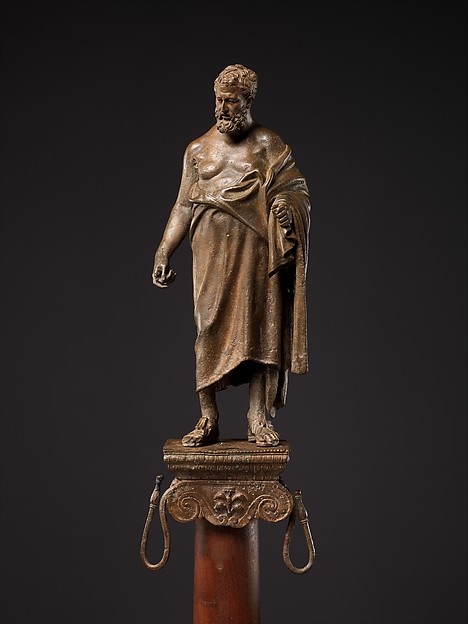
Stoicism offers a calm, rigorously practical way of thinking about what matters in life. Born in the marketplace of Athens and refined by Roman thinkers, it asks how we can live with integrity amid forces beyond our control. Its appeal lies in clear-eyed attention to judgment, desire, and action: cultivate what you can shape, accept what you cannot, and train the mind to respond instead of react. For modern readers stoicism can feel both austere and oddly freeing; it trades sentimental reassurance for habits of thought that steady attention, sharpen moral responsibility, and clarify the limits of what any single life can achieve.
Definition
Stoicism teaches that freedom and flourishing depend on living according to reason and distinguishing what is up to us from what is not.
Why It Matters
Stoicism is best approached as a living philosophical tool rather than a dictionary label. It helps readers see how a problem, distinction, or tradition organizes arguments.
A careful reading of Stoicism requires attention to its historical setting, its rival interpretations, and the examples through which it becomes intelligible.
The concept matters because it connects abstract inquiry to recurring human questions about knowledge, value, reality, action, and meaning.
Historical Context
Stoicism began in the early third century BCE with Zeno of Citium, who taught in a painted porch, or stoa, in Athens. Early Stoics combined Socratic ethics with a cosmology that saw the world as an intelligible, law-governed whole. Virtue was presented as knowledge: to act well one must correctly judge what is truly good, indifferent, or bad. This unity of ethics and physics made the school distinctive and coherent, aiming to align character with a rational order, not simply to prescribe a set of rules.
During the Hellenistic centuries Stoicism developed technical doctrines about the passions, assent, and the structure of reason. Stoic logicians worked on language and argument, while physicians and natural philosophers discussed determinism and human agency. The school spread across the Mediterranean, attracting students who sought practical guidance rather than abstract metaphysics. By the first century BCE and into the Roman period, Stoicism became a living moral program for public life, influencing politicians, teachers, and ordinary citizens.
Roman Stoics such as Seneca, Epictetus, and Marcus Aurelius popularized the teaching in vivid, personal forms. Seneca wrote letters and essays on ethical dilemmas; Epictetus preserved a teacherly handbook for daily discipline; Marcus recorded reflections amid imperial responsibility. Their works emphasize techniques of self-examination, rehearsals of adversity, and the cultivation of inner freedom despite external constraints. The Stoic legacy persisted through late antiquity into modern thought, informing debates about reason, virtue, and the role of emotion in moral life.
Why Keep Reading
Debate Map
Virtue as sole good
Early and mainstream Stoic claims assert that virtue alone is genuinely good and that external goods are indifferent at best. Critics have long challenged this as implausible: people naturally value health, friends, and comfort. Defenders argue that Stoic indifference need not deny ordinary value; rather, it insists that moral worth and flourishing depend on character. Contemporary interpreters split: some read the claim as metaphysical absolutism, others as a practical stance about priorities in deliberation and resilience under misfortune.
Determinism and responsibility
Stoic physics often describes the universe as governed by rational necessity, which raises a tension with moral responsibility. Were Stoics fatalists who denied agency? Classical Stoics offered compatibilist moves: human choice is part of the causal network and depends on rational assent. Modern scholars debate how coherent those moves are and whether Stoic acceptance of fate supports passivity or strengthens moral resolve. The tension highlights broader philosophical questions about freedom, moral blame, and psychological readiness to act.
How To Read This Concept Closely
Consider the Stoic technique of examining impressions before assent. The practice trains a brief pause between what appears and what one allows to shape judgment. Rather than suppressing emotion wholesale, this pause lets reason assess whether a desire or aversion tracks what truly matters. Practically, the technique reduces impulsive reactions: anger loses momentum if the mind asks whether the insult threatens a genuine value, and grief gains shape if one distinguishes loss of externals from loss of moral integrity.
The Stoic notion of preferred indifferents—things that are neither good nor bad but can be preferred—refines moral decision-making. Health, wealth, and reputation are not morally required but still matter instrumentally and affectively. This view prevents moral fanaticism while keeping virtue central. It articulates a scale of concern in which external goods can be sought prudently, but never at the expense of wisdom or justice. The balance protects character without demanding unnatural asceticism.
Read Marcus Aurelius’ reflections as exercises in perspective rather than abstract metaphysics. His reminders to accept change, to keep daily work modest, and to remember the common human condition are tactical: short prompts designed to recalibrate attention in real time. They model how aphoristic thought can become habitual. The prose shows Stoicism as an ongoing practice, a set of cognitive and moral habits aimed at shaping responses to specific, repeated pressures rather than a once-and-for-all intellectual conversion.
How This Concept Works In Arguments
How This Concept Does Work
Stoicism is useful because it does more than name a topic. It gives a reader a way to sort examples, test claims, and notice where an argument is changing levels. In Hellenistic philosophy, the term often marks a pressure point: one side treats the issue as a matter of definition, another side treats it as a problem of practice, and a third side asks what the concept hides when it is used too quickly.
A strong reading therefore asks what the concept explains, what it leaves unresolved, and which neighboring concepts it needs. On this page those neighbors include Virtue, Apatheia, and Control. Reading them together prevents Stoicism from becoming an isolated label. It becomes part of a network of distinctions that can support essays, classroom discussion, and slower interpretation of primary texts.
How To Use It In An Argument
When you use Stoicism in an argument, begin by naming the problem it is meant to solve. Then ask whether the concept is being used descriptively, normatively, historically, or comparatively. This simple check keeps the discussion from sliding between different claims. It also helps explain why two writers may use similar language while disagreeing about what follows from it.
The safest essay move is to connect the definition to a concrete contrast. A paragraph can state the definition, show an example, introduce a misconception, and then compare Stoicism with one related idea. That pattern gives the reader enough structure to follow the argument without reducing the concept to a slogan or a dictionary sentence.
What To Notice In Sources
The sources for this page are not decoration. They show which institutions, reference works, and primary traditions make the concept stable enough to cite. Start with Stanford University, University of Tennessee at Martin, and Wikimedia Foundation, then ask how each source frames the problem: as a historical development, a live debate, a textual interpretation, or a practical distinction. The differences between sources often reveal the concept's real shape.
When Epictetus, Seneca, and Marcus Aurelius appear in connection with Stoicism, read them for the question they are answering, not only for a quotable sentence. Philosophical terms change meaning as they move across texts and problems. A careful reader tracks that movement and asks why this term, rather than a simpler one, became necessary.
A final source check is to ask what would count as misuse. If a source treats Stoicism as a technical term, the reader should not use it as a loose mood word. If a source treats it as a family of debates, the reader should name the debate rather than forcing one settled meaning too quickly.
Study Prompts
- 01What problem becomes harder to see if Stoicism is removed from the discussion?
- 02Which related concept most sharply changes how Stoicism should be read?
- 03Where does an example support the definition, and where does it strain it?
Key Questions
- 01What problem does Stoicism try to clarify?
- 02Which thinkers and traditions shaped Stoicism?
- 03How does Stoicism change the way readers understand philosophy?
Examples
- A reader can use Stoicism to distinguish a surface-level slogan from the deeper philosophical issue underneath it.
- In discussion, Stoicism helps connect an everyday problem to a tradition of argument rather than treating it as mere opinion.
Common Misconceptions
Stoicism has one simple meaning in every context.
Its meaning shifts across authors and traditions, so context matters.
Stoicism is only a historical term.
It remains useful because the problem it names still appears in contemporary debates.
Stoicism can be understood without related concepts.
It becomes clearer when placed beside neighboring and contrasting ideas.
FAQ
Why is Stoicism important?
It gives readers a stable entry point into a broader philosophical debate.
How should beginners read about Stoicism?
Begin with a concise definition, then compare examples, related concepts, and the main thinkers associated with it.
Suggested Reading Path
- Step 1
Start with short exercises
Begin by practicing momentary pauses before assent and brief daily reflections on what truly matters; short, repeatable exercises help form habits without requiring deep study or dramatic life change.
- Step 2
Focus on applied texts
Read letters and fragments that model practice—personal reflections and ethical counseling show how Stoic principles play out in concrete dilemmas, offering patterns you can test in ordinary situations.
- Step 3
Test the distinction of control
Try mapping a week of concerns into what you can and cannot control, then act only on the former; this experiment clarifies motivation, reduces wasted effort, and reveals psychological obstacles to acceptance.
Questions To Think With
- Which desires in your life drive repeated dissatisfaction, and how might stricter judgment of assent change them?
- When faced with a setback, how do you separate what is within your power from what is not?
- Can the pursuit of external goods be reconciled with prioritizing moral character in your current responsibilities?
- How would adopting short daily practices affect your capacity for calm and moral attention?
- In what situations might Stoic acceptance verge into passivity, and how would you guard against that?
Where To Go Next
Sources
- Stanford Encyclopedia of PhilosophyStanford University - plato.stanford.edu
- Internet Encyclopedia of PhilosophyUniversity of Tennessee at Martin - iep.utm.edu
- WikidataWikimedia Foundation - wikidata.org