Tawhid
Tawhid names divine unity or oneness, the central claim that shapes Islamic theology, metaphysics, worship, and philosophical accounts of ultimate dependence.
Short answer
Tawhid names divine unity or oneness, the central claim that shapes Islamic theology, metaphysics, worship, and philosophical accounts of ultimate dependence.
Why it matters
Tawhid is best approached as a living philosophical tool rather than a dictionary label. It helps readers see how a problem, distinction, or tradition organizes arguments.
Example
A reader can use Tawhid to distinguish a surface-level slogan from the deeper philosophical issue underneath it.
Common confusion
Tawhid has one simple meaning in every context. Its meaning shifts across authors and traditions, so context matters.
Read this if
- You want to understand divine unity as a philosophical pressure, not only as a religious slogan.
- You are comparing Tawhid with divine attributes, kalam, or the Necessary Existent.
- You need a concept for dependence, unity, worship, and ultimate explanation.
Core tension
Tawhid affirms divine unity, but philosophical theology still has to speak meaningfully about attributes, action, causation, and revelation.
Best for
Islamic philosophy, philosophy of religion, metaphysics, and theological language.
A useful way in
What does divine unity mean for God, worship, knowledge, and the order of reality?
Start here
Use this page as an entry point into Islamic philosophy, kalam, divine attributes, creation, and metaphysics.
Keep reading for
The central issue is how unity shapes arguments about language, causation, theology, and the limits of human understanding.
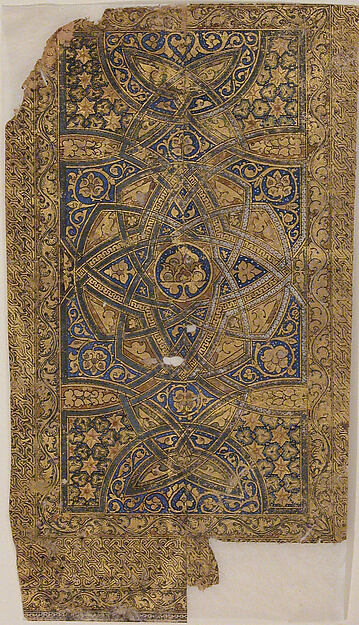
Start With The Human Problem
Tawhid matters because Islamic philosophy is not a simple choice between faith and reason. It is a long argument about how revelation, demonstration, language, soul, causation, existence, divine unity, and human responsibility can be read together without flattening any of them. A reader may understand unity as a simple number claim, while the philosophical problem asks how all dependent reality relates to one ultimate source without dividing that source into parts. The concept gives that pressure a disciplined vocabulary. A useful first reading asks what kind of work the term is doing: proving, interpreting, defending, disciplining the soul, clarifying language, or marking the limit of what human reason can safely claim.
Definition
Tawhid names divine unity or oneness, the central claim that shapes Islamic theology, metaphysics, worship, and philosophical accounts of ultimate dependence.
Why It Matters
Tawhid is best approached as a living philosophical tool rather than a dictionary label. It helps readers see how a problem, distinction, or tradition organizes arguments.
A careful reading of Tawhid requires attention to its historical setting, its rival interpretations, and the examples through which it becomes intelligible.
The concept matters because it connects abstract inquiry to recurring human questions about knowledge, value, reality, action, and meaning.
Historical Context
Tawhid stands at the center of Islamic theology and philosophy as the affirmation of divine unity, shaping how thinkers discuss God, dependence, attributes, worship, causation, and ultimate explanation. The term belongs to a world of translation, commentary, disputation, legal-theological reasoning, medicine, astronomy, logic, mystical discipline, and philosophical system-building. That setting matters because Tawhid is rarely just a label. It often sits between Greek inheritance, Qur'anic language, Arabic technical vocabulary, and arguments among philosophers, theologians, jurists, and later commentators.
Classical Islamic philosophy includes falsafa, kalam, Sufi metaphysics, illuminationist philosophy, Avicennian metaphysics, and later debates over being and quiddity. These currents often borrow vocabulary while disagreeing about method. A philosopher may ask for demonstration; a theologian may test claims against divine unity and revelation; a mystically oriented thinker may ask how knowing becomes presence rather than only inference. Tawhid becomes richer when those methods are not collapsed.
The tradition also sits inside a wider medieval and global history. Ibn Sina, Al-Farabi, Al-Ghazali, Suhrawardi, Ibn Rushd, Mulla Sadra, Jewish philosophers, Latin scholastics, and later readers all reshape the map. Arguments about necessity, contingency, intellect, soul, attributes, causation, and divine speech travel across languages. That travel is why a page on Tawhid should help readers see both Islamic context and broader philosophical consequence.
Modern readers often meet Tawhid through philosophy of religion, medieval philosophy, Islamic studies, comparative theology, or brief textbook summaries. Those entrances are useful but incomplete. The stronger reading asks which question is being answered, which source of authority is being used, which rival view is being corrected, and what would be lost if the term were replaced by a quick English synonym.
Why Keep Reading
Debate Map
Tawhid as metaphysical unity
This view treats Tawhid as a claim about ultimate dependence and the unity of the divine source. It gives arguments about contingency, necessity, and creation a unifying center. Critics ask whether philosophical language can preserve the revealed force of divine unity.
Tawhid as theological safeguard
This view emphasizes Tawhid as a protection against shirk, anthropomorphism, and careless speech about attributes. It is not anti-philosophical, but it tests philosophical claims by asking whether they compromise divine oneness.
How To Read This Concept Closely
When reading Tawhid, begin with the method of the passage. Is the author giving a demonstration, interpreting revealed language, defending divine unity, explaining the soul, analyzing causation, or correcting a rival school? Look for whether unity is being discussed through being, worship, causation, attributes, or the grammar of divine names. The answer changes the force of the same word. A term may operate as a logical distinction in one text, a theological safeguard in another, and a spiritual discipline in a third.
Watch the level of language. Islamic texts often distinguish what can be said literally, analogically, negatively, demonstratively, or pedagogically. A claim about God, intellect, or existence may not work like a claim about ordinary objects. Careless reading turns technical restraint into vagueness or turns analogical speech into crude similarity.
Ask what the term protects. Tawhid may protect divine unity; kalam may protect intelligible doctrine; essence and existence may protect contingency; aql may protect responsible understanding; nafs may protect a full account of personhood; divine attributes may protect meaningful praise without compromising unity. The protective function often explains why the debate becomes intense.
Finally, test the term against a case. Ask how Tawhid would handle a contingent object, a moral choice, a scriptural phrase, an apparent miracle, a scientific explanation, a psychological struggle, or an argument about whether the world depends at every moment on God. Cases reveal whether the concept is metaphysical, theological, linguistic, practical, or all of these at once.
How This Concept Works In Arguments
How This Concept Does Work
Tawhid is useful because it does more than name a topic. It gives a reader a way to sort examples, test claims, and notice where an argument is changing levels. In Islamic philosophy, the term often marks a pressure point: one side treats the issue as a matter of definition, another side treats it as a problem of practice, and a third side asks what the concept hides when it is used too quickly.
A strong reading therefore asks what the concept explains, what it leaves unresolved, and which neighboring concepts it needs. On this page those neighbors include Kalam, Necessary Existent, and Divine Attributes. Reading them together prevents Tawhid from becoming an isolated label. It becomes part of a network of distinctions that can support essays, classroom discussion, and slower interpretation of primary texts.
How To Use It In An Argument
When you use Tawhid in an argument, begin by naming the problem it is meant to solve. Then ask whether the concept is being used descriptively, normatively, historically, or comparatively. This simple check keeps the discussion from sliding between different claims. It also helps explain why two writers may use similar language while disagreeing about what follows from it.
The safest essay move is to connect the definition to a concrete contrast. A paragraph can state the definition, show an example, introduce a misconception, and then compare Tawhid with one related idea. That pattern gives the reader enough structure to follow the argument without reducing the concept to a slogan or a dictionary sentence.
What To Notice In Sources
The sources for this page are not decoration. They show which institutions, reference works, and primary traditions make the concept stable enough to cite. Start with Encyclopaedia Britannica, Quran.com, and Encyclopaedia Britannica, then ask how each source frames the problem: as a historical development, a live debate, a textual interpretation, or a practical distinction. The differences between sources often reveal the concept's real shape.
When Al-Farabi, Ibn Sina, and Al-Ghazali appear in connection with Tawhid, read them for the question they are answering, not only for a quotable sentence. Philosophical terms change meaning as they move across texts and problems. A careful reader tracks that movement and asks why this term, rather than a simpler one, became necessary.
A final source check is to ask what would count as misuse. If a source treats Tawhid as a technical term, the reader should not use it as a loose mood word. If a source treats it as a family of debates, the reader should name the debate rather than forcing one settled meaning too quickly.
Study Prompts
- 01What problem becomes harder to see if Tawhid is removed from the discussion?
- 02Which related concept most sharply changes how Tawhid should be read?
- 03Where does an example support the definition, and where does it strain it?
Key Questions
- 01What problem does Tawhid try to clarify?
- 02Which thinkers and traditions shaped Tawhid?
- 03How does Tawhid change the way readers understand philosophy?
Examples
- A reader can use Tawhid to distinguish a surface-level slogan from the deeper philosophical issue underneath it.
- In discussion, Tawhid helps connect an everyday problem to a tradition of argument rather than treating it as mere opinion.
Common Misconceptions
Tawhid has one simple meaning in every context.
Its meaning shifts across authors and traditions, so context matters.
Tawhid is only a historical term.
It remains useful because the problem it names still appears in contemporary debates.
Tawhid can be understood without related concepts.
It becomes clearer when placed beside neighboring and contrasting ideas.
FAQ
Why is Tawhid important?
It gives readers a stable entry point into a broader philosophical debate.
How should beginners read about Tawhid?
Begin with a concise definition, then compare examples, related concepts, and the main thinkers associated with it.
Suggested Reading Path
- Step 1
Start with the problem Tawhid answers
Identify the pressure first: A reader may understand unity as a simple number claim, while the philosophical problem asks how all dependent reality relates to one ultimate source without dividing that source into parts. Without that pressure, the term becomes a loose translation rather than a philosophical tool.
- Step 2
Place it beside a method
Ask whether the page is moving through falsafa, kalam, illuminationism, Avicennian metaphysics, or philosophical theology. Method changes what counts as a good answer.
- Step 3
Read one close contrast
Use the nearest comparison to keep Tawhid from absorbing too much. Islamic philosophy often becomes clearest when Tawhid, Kalam, Wujud, Falsafa, Attributes, and Necessary Existent are kept in relation.
- Step 4
Connect it to a source question
Ask how the term would be tested by a stable source: an encyclopedia entry, a primary text, a commentary tradition, or a debate about reason and revelation.
Questions To Think With
- What does Tawhid let a reader see that a quick English translation hides?
- Does Tawhid make a metaphysical claim, a theological claim, a claim about language, or a claim about practice?
- Which neighboring concept most changes the meaning of Tawhid when the two are read together?
- What would be misunderstood if Tawhid were treated as only religious vocabulary and not as philosophical vocabulary?
- How does Tawhid change the relation between reason, revelation, and interpretation?
- What contemporary example could make Tawhid clear without making it sound like a slogan?
Where To Go Next
Sources
- Britannica - TawhidEncyclopaedia Britannica - britannica.com
- Quran.com - Surah Al-IkhlasQuran.com - quran.com
- Britannica - Islamic PhilosophyEncyclopaedia Britannica - britannica.com
- Britannica - KalamEncyclopaedia Britannica - britannica.com
- Stanford Encyclopedia of Philosophy - Ibn SinaStanford University - plato.stanford.edu
- OpenStax - The Philosophy of ReligionOpenStax - openstax.org