Ethics
Ethics asks what makes actions right, lives good, people admirable, institutions just, and responsibilities binding.
Short answer
Ethics asks what makes actions right, lives good, people admirable, institutions just, and responsibilities binding.
Why it matters
Ethics includes practical questions about action and theoretical questions about value. It asks not only what rules to follow, but what counts as a reason for action.
Example
A doctor deciding whether to disclose a painful truth faces questions about autonomy, harm, trust, and duty.
Common confusion
Ethics is just personal preference. Ethical argument tries to give reasons that others can examine.
Read this if
- You want a map before comparing moral theories.
- You are trying to separate rules, outcomes, character, care, and cultivation.
- You need examples that make moral reasoning concrete.
Core tension
Moral life asks for reasons, but different theories disagree about what counts as basic.
Best for
Moral theory, applied ethics, essays, technology, medicine, and politics.
A useful way in
How should I decide what is right when rules, outcomes, and character point in different directions?
Start here
Use this page to separate moral questions from legal, personal, or cultural preferences before moving into ethical theories.
Keep reading for
The useful part is the tension between duties, consequences, virtues, care, and real examples where simple answers break down.
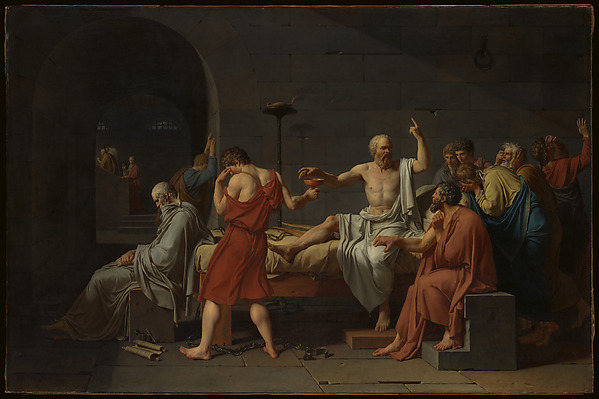
Start With The Human Problem
Ethics asks how we should live together: which actions count as right or wrong, which motivations deserve praise or censure, and how institutions shape moral possibility. It connects private choices to public responsibility, asking whether principles, consequences, or character best guide conduct. Ethics also tests ordinary terms—duty, justice, virtue—against concrete dilemmas: poverty, climate strain, technological risk, and unequal power. Reading ethics sharpens judgement without promising simple answers; it trains attention to reasons, trade-offs, and human vulnerability. That combination of rigor and compassion makes ethics a practical intellectual practice rather than a set of abstract rules.
Definition
Ethics is philosophical reflection on how we ought to live, act, judge, and become.
Why It Matters
Ethics includes practical questions about action and theoretical questions about value. It asks not only what rules to follow, but what counts as a reason for action.
Major traditions include virtue ethics, which begins with character; deontology, which stresses duty; and consequentialism, which evaluates outcomes. Non-Western traditions add rich accounts of harmony, ritual, liberation, compassion, and divine command.
Ethics becomes difficult because moral life contains conflicts: loyalty and truth, freedom and safety, happiness and justice, mercy and accountability.
Historical Context
Philosophical reflection about right and wrong reaches back to antiquity. Ancient Greek thinkers moved ethics from ritual law into public argument and practical reason. Socrates prompted self-examination and public argument; Plato explored justice as an ideal form; Aristotle foregrounded human flourishing and practical wisdom. Simultaneously, other cultures developed robust moral thought: Confucian texts emphasized social roles and cultivation of character, while Indian traditions debated dharma and duty. These early strands set recurring themes: whether morality is grounded in reason, social harmony, divine command, or cultivated dispositions, and how individual virtue relates to collective wellbeing.
In medieval and early modern periods, faith and reason competed and sometimes braided together. Religious traditions supplied moral frameworks tied to theology and communal practice. Medieval scholastics sought to reconcile revelation with rational argument. Later, Enlightenment thinkers reoriented ethics toward autonomy, rights, and universal principles: Kant stressed duty derived from rational will, while utilitarians like Bentham and Mill measured right action by aggregated welfare. Political and economic transformations—emerging states, capitalism, scientific advances—pushed ethicists to rethink obligations between citizens, rulers, and markets, and to consider rights and justice in new social contexts.
Contemporary ethics branches into many specialized conversations: applied ethics treats concrete dilemmas in medicine, business, environment, and technology; metaethics questions the meaning and objectivity of moral claims; normative theories propose frameworks for action; and political philosophy focuses on institutions and distribution. Social movements and scientific discoveries frequently prompt reexaminations of ethical assumptions. At the same time, intercultural dialogue highlights plural perspectives, challenging claims of a single moral standard while insisting on mutual critique. The result is a lively field where conceptual clarity and practical concern intersect.
Why Keep Reading
Debate Map
Consequentialism
Consequentialist theories evaluate actions by their outcomes: the morally best action produces the best overall consequences, often framed in terms of welfare or preference satisfaction. Classical utilitarianism treats aggregate happiness as the metric. Strengths include a clear decision procedure and concern for impartial aggregate good. Criticisms highlight potential disregard for individual rights, demanding calculations about diffuse effects, and difficulties comparing different kinds of goods. Contemporary consequentialists respond with refined metrics, threshold rules, and attention to fairness, but tension remains between maximizing aggregates and protecting individuals from instrumentalization.
Deontology and Rights-Based Ethics
Deontological approaches anchor morality in duties, rules, or respect for persons rather than outcomes. Kantian ethics emphasizes acting on maxims that can be willed as universal law and treating individuals as ends in themselves. Rights-based views protect entitlements against violation. These accounts prize consistency, dignity, and moral constraints on utilitarian calculation. Critics argue they can be rigid, produce conflicting duties, or lack guidance in emergency trade-offs. Modern work attempts to reconcile duties with consequential considerations and to specify rights frameworks that admit justified limitation under clear conditions.
How To Read This Concept Closely
Consider the concept of moral responsibility. Ordinary talk associates responsibility with blame or praise when outcomes occur. Philosophers distinguish causal responsibility from moral responsibility: one can cause harm without being morally blameworthy if one lacked control or knowledge. Debates test concepts like foreseeability, intention, negligence, and strict liability. Clarifying responsibility matters for law, public policy, and interpersonal accountability. Ethics encourages precise questions: which agents count as responsible, what kinds of ignorance excuse, and how collective systems distribute or dilute responsibility across institutions and roles.
Examine the idea of justice. Justice names claims about fair treatment and proper distribution of benefits and burdens. Distributive justice evaluates who should receive resources and on what basis—need, desert, equality, or contribution. Retributive justice considers responses to wrongdoing; restorative approaches focus on repair and reconciliation. Rawls introduced a contractual frame to justify principles under fair conditions; others prioritize outcomes or social recognition. Reading justice closely shows it is not a single calculation but a family of concerns—procedural fairness, material equality, respect, and rehabilitation—that sometimes conflict and require trade-offs.
Look at moral emotions and character. Ethics is often presented as rule-following, but moral life is saturated with feelings—sympathy, indignation, guilt—and dispositions like courage or honesty. Aristotle emphasized habituation and practical wisdom: virtues are stable traits that enable good action in particular circumstances. Contemporary virtue ethics revives that focus, arguing that moral education and institutional design cultivate persons who can judge well. Attention to character shifts some ethical questions from singular choices to growth, friendship, and social conditions that enable moral development.
How This Concept Works In Arguments
How This Concept Does Work
Ethics is useful because it does more than name a topic. It gives a reader a way to sort examples, test claims, and notice where an argument is changing levels. In Moral philosophy, the term often marks a pressure point: one side treats the issue as a matter of definition, another side treats it as a problem of practice, and a third side asks what the concept hides when it is used too quickly.
A strong reading therefore asks what the concept explains, what it leaves unresolved, and which neighboring concepts it needs. On this page those neighbors include Virtue Ethics, Deontology, Utilitarianism, and Justice. Reading them together prevents Ethics from becoming an isolated label. It becomes part of a network of distinctions that can support essays, classroom discussion, and slower interpretation of primary texts.
How To Use It In An Argument
When you use Ethics in an argument, begin by naming the problem it is meant to solve. Then ask whether the concept is being used descriptively, normatively, historically, or comparatively. This simple check keeps the discussion from sliding between different claims. It also helps explain why two writers may use similar language while disagreeing about what follows from it.
The safest essay move is to connect the definition to a concrete contrast. A paragraph can state the definition, show an example, introduce a misconception, and then compare Ethics with one related idea. That pattern gives the reader enough structure to follow the argument without reducing the concept to a slogan or a dictionary sentence.
What To Notice In Sources
The sources for this page are not decoration. They show which institutions, reference works, and primary traditions make the concept stable enough to cite. Start with Stanford University, University of Tennessee at Martin, and OpenStax, then ask how each source frames the problem: as a historical development, a live debate, a textual interpretation, or a practical distinction. The differences between sources often reveal the concept's real shape.
When Aristotle, Immanuel Kant, John Stuart Mill, and Mencius appear in connection with Ethics, read them for the question they are answering, not only for a quotable sentence. Philosophical terms change meaning as they move across texts and problems. A careful reader tracks that movement and asks why this term, rather than a simpler one, became necessary.
A final source check is to ask what would count as misuse. If a source treats Ethics as a technical term, the reader should not use it as a loose mood word. If a source treats it as a family of debates, the reader should name the debate rather than forcing one settled meaning too quickly.
Study Prompts
- 01What problem becomes harder to see if Ethics is removed from the discussion?
- 02Which related concept most sharply changes how Ethics should be read?
- 03Where does an example support the definition, and where does it strain it?
Key Questions
- 01What makes an action right or wrong?
- 02What kind of person should one become?
- 03How should competing goods be balanced?
Examples
- A doctor deciding whether to disclose a painful truth faces questions about autonomy, harm, trust, and duty.
- A company designing addictive software faces ethical questions beyond legality or profit.
Common Misconceptions
Ethics is just personal preference.
Ethical argument tries to give reasons that others can examine.
Ethics only means rules.
Many traditions focus on character, flourishing, compassion, or wisdom.
If cultures differ, ethics is impossible.
Disagreement makes ethical reasoning harder, not pointless.
FAQ
What is moral philosophy?
Moral philosophy is another name for ethics as a field of philosophical inquiry.
Is ethics practical?
Yes. It shapes decisions in medicine, law, technology, politics, and everyday relationships.
Suggested Reading Path
- Step 1
Start with classic contrasts
Compare a consequentialist text with a deontological piece to see how different frameworks handle the same problem—such as lying to save a life. This clarifies foundational commitments and reveals where intuitions align or clash with formal principles.
- Step 2
Apply theory to a concrete case
Take a current ethical dilemma—healthcare triage, algorithmic bias, or climate policy—and test each theory’s recommendations. Application exposes practical constraints and prompts refinement of abstract claims into actionable guidance.
Questions To Think With
- When you judge an action wrong, are you focused on consequences, duties, or character, and why?
- Which relationships or institutions shape your moral responsibilities in ways you might overlook?
- How should competing values like equality and efficiency be weighed in public policy decisions?
- What role should moral emotions play in forming ethical rules or laws?
- Can moral disagreement across cultures be accommodated without abandoning critical standards?
Where To Go Next
Sources
- Stanford Encyclopedia of Philosophy - MetaethicsStanford University - plato.stanford.edu
- Internet Encyclopedia of Philosophy - EthicsUniversity of Tennessee at Martin - iep.utm.edu
- OpenStax - Requirements of a Normative Moral TheoryOpenStax - openstax.org