Virtue Ethics
Ethics can begin with the formation of good character rather than with rules or consequences alone.
Short answer
Ethics can begin with the formation of good character rather than with rules or consequences alone.
Why it matters
Virtue Ethics is best approached as a living philosophical tool rather than a dictionary label. It helps readers see how a problem, distinction, or tradition organizes arguments.
Example
A reader can use Virtue Ethics to distinguish a surface-level slogan from the deeper philosophical issue underneath it.
Common confusion
Virtue Ethics has one simple meaning in every context. Its meaning shifts across authors and traditions, so context matters.
Read this if
- You want a plain-English entry point into Virtue Ethics.
- You need examples before moving into primary texts or specialist debates.
- You are mapping how Virtue Ethics connects to nearby ideas in Ethics.
Core tension
The concept looks simple as a label, but becomes clearer only when its contrasts and examples are visible.
Best for
Ethics, comparative reading, essay planning, and concept mapping.
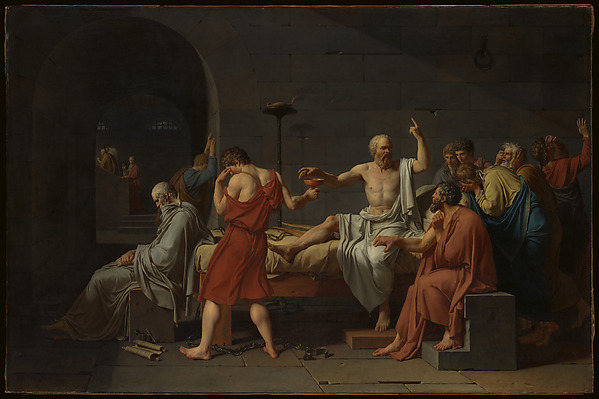
Start With The Human Problem
Virtue ethics asks a simple but stubborn question: what kind of person should you aim to be? Rather than listing rules or calculating outcomes, it centers moral life on character and disposition. A practitioner of virtue ethics looks at habits, motivations, and the forms of practical wisdom that shape conduct. This approach places moral growth, role models, and the cultivation of stable motives at the heart of ethics, inviting readers to consider character as both explanatory and aspirational for why people act as they do and how they might live better together.
Definition
Ethics can begin with the formation of good character rather than with rules or consequences alone.
Why It Matters
Virtue Ethics is best approached as a living philosophical tool rather than a dictionary label. It helps readers see how a problem, distinction, or tradition organizes arguments.
A careful reading of Virtue Ethics requires attention to its historical setting, its rival interpretations, and the examples through which it becomes intelligible.
The concept matters because it connects abstract inquiry to recurring human questions about knowledge, value, reality, action, and meaning.
Historical Context
Virtue-based thinking has roots in ancient Greek philosophy, where Plato and Aristotle explored moral excellence through concepts like arete and phronesis. Plato probed the unity of virtues within the soul, while Aristotle offered a careful account of moral development: virtues are acquired by habituation and require the right balance between extremes, the so-called golden mean. For Aristotle, ethics was practical, aimed at flourishing as a whole life rather than compliance with abstract principles.
In late antiquity and the medieval period, virtue language shifted to religious frameworks. Christian thinkers integrated classical virtues with theological ones, focusing on dispositions formed by grace and communal practice. Monastic rules and pastoral guidance emphasized interior habits and moral formation. Across cultures, virtue traditions also appear in Confucianism and other ethical systems that foreground role, ritual, and the cultivation of character in social contexts rather than isolated acts.
Modern moral philosophy often emphasized duties or consequences, and virtue ethics receded from center stage until a renewed interest in the twentieth century. Philosophers like Elizabeth Anscombe, Philippa Foot, and Alasdair MacIntyre argued for a revival, criticizing dominant theories for ignoring character and moral psychology. Their work reframed moral philosophy to include moral exemplars, narratives, and practices as central to understanding ethical life, prompting a lively contemporary discourse that spans theory, applied ethics, and empirical research on virtue cultivation.
Why Keep Reading
Debate Map
Agent-centered account
This position treats virtue ethics as primarily about the moral agent: what traits constitute moral excellence, how they are acquired, and how they explain actions. Proponents argue that virtues like courage or honesty supply reasons for action and unify a person's life. Critics question whether listing virtues yields clear guidance in dilemmas, and whether virtues can ground moral obligation independently of rules or outcomes. Supporters respond by pointing to practical wisdom as the bridge between stable character and situational judgment.
Character and social practice
This strand emphasizes the social formation of virtues, arguing that communities, narratives, and institutions construct the roles and practices through which virtues can flourish. It highlights cultural variation and the role of education, ritual, and exemplary figures in shaping character. Debates revolve around relativism and normativity: if virtues depend on community, can we criticize harmful traditions? Advocates maintain that critical reflection and telos-based standards allow cross-cultural moral assessment without collapsing into mere custom.
How To Read This Concept Closely
Consider Aristotle's claim that virtues are states between extremes. He does not present a formula for every case but offers a framework for sensitivity to context. Courage is neither rashness nor cowardice because it involves appropriate responses to danger, calibrated by reason and habituated feeling. This means moral expertise is partly perceptual: one must see what a given situation calls for and feel the appropriate affect. Such perceptual skill is developed through experience and guided by role models whose judgments shape our own.
Take the concept of phronesis, or practical wisdom. It functions as more than clever calculation; phronesis coordinates moral perception, conviction, and action. A person with practical wisdom recognizes salient features of a situation, recalls relevant moral principles and past cases, and judges rightly about means and ends. This capacity links motive and deliberation: virtues are not blind impulses but settled tendencies guided by informed judgment. In practice, cultivating phronesis requires reflection on failures and successes and exposure to a variety of moral contexts.
Virtue ethics also reframes moral failure. Instead of asking only what rule was broken, it asks what trait is missing or corrupted. Anger becomes a vice when it is excessive or misdirected, but a properly ordered emotion can be morally valuable. Repair then looks like re-education, apology, and habit change rather than mere compliance. This perspective offers a constructive vocabulary for rehabilitation, moral education, and leadership, emphasizing sustained character formation over episodic correction.
How This Concept Works In Arguments
How This Concept Does Work
Virtue Ethics is useful because it does more than name a topic. It gives a reader a way to sort examples, test claims, and notice where an argument is changing levels. In Ethics, the term often marks a pressure point: one side treats the issue as a matter of definition, another side treats it as a problem of practice, and a third side asks what the concept hides when it is used too quickly.
A strong reading therefore asks what the concept explains, what it leaves unresolved, and which neighboring concepts it needs. On this page those neighbors include Virtue, Flourishing, and Ethics. Reading them together prevents Virtue Ethics from becoming an isolated label. It becomes part of a network of distinctions that can support essays, classroom discussion, and slower interpretation of primary texts.
How To Use It In An Argument
When you use Virtue Ethics in an argument, begin by naming the problem it is meant to solve. Then ask whether the concept is being used descriptively, normatively, historically, or comparatively. This simple check keeps the discussion from sliding between different claims. It also helps explain why two writers may use similar language while disagreeing about what follows from it.
The safest essay move is to connect the definition to a concrete contrast. A paragraph can state the definition, show an example, introduce a misconception, and then compare Virtue Ethics with one related idea. That pattern gives the reader enough structure to follow the argument without reducing the concept to a slogan or a dictionary sentence.
What To Notice In Sources
The sources for this page are not decoration. They show which institutions, reference works, and primary traditions make the concept stable enough to cite. Start with Stanford University, University of Tennessee at Martin, and OpenStax, then ask how each source frames the problem: as a historical development, a live debate, a textual interpretation, or a practical distinction. The differences between sources often reveal the concept's real shape.
When Aristotle, Philippa Foot, and Alasdair MacIntyre appear in connection with Virtue Ethics, read them for the question they are answering, not only for a quotable sentence. Philosophical terms change meaning as they move across texts and problems. A careful reader tracks that movement and asks why this term, rather than a simpler one, became necessary.
A final source check is to ask what would count as misuse. If a source treats Virtue Ethics as a technical term, the reader should not use it as a loose mood word. If a source treats it as a family of debates, the reader should name the debate rather than forcing one settled meaning too quickly.
Study Prompts
- 01What problem becomes harder to see if Virtue Ethics is removed from the discussion?
- 02Which related concept most sharply changes how Virtue Ethics should be read?
- 03Where does an example support the definition, and where does it strain it?
Key Questions
- 01What problem does Virtue Ethics try to clarify?
- 02Which thinkers and traditions shaped Virtue Ethics?
- 03How does Virtue Ethics change the way readers understand philosophy?
Examples
- A reader can use Virtue Ethics to distinguish a surface-level slogan from the deeper philosophical issue underneath it.
- In discussion, Virtue Ethics helps connect an everyday problem to a tradition of argument rather than treating it as mere opinion.
Common Misconceptions
Virtue Ethics has one simple meaning in every context.
Its meaning shifts across authors and traditions, so context matters.
Virtue Ethics is only a historical term.
It remains useful because the problem it names still appears in contemporary debates.
Virtue Ethics can be understood without related concepts.
It becomes clearer when placed beside neighboring and contrasting ideas.
FAQ
Why is Virtue Ethics important?
It gives readers a stable entry point into a broader philosophical debate.
How should beginners read about Virtue Ethics?
Begin with a concise definition, then compare examples, related concepts, and the main thinkers associated with it.
Suggested Reading Path
- Step 1
Start with Aristotle
Read Nicomachean Ethics to grasp core ideas: virtues as habits, the golden mean, and practical wisdom. Understanding his method — case-based reflection and life-oriented aims — provides a foundation for later debates and modern revivals.
- Step 2
Explore contemporary defenders
Study 20th century figures like Anscombe, MacIntyre, and Foot to see how virtue ethics responds to criticisms of deontology and consequentialism, and how it reintroduces historical and narrative dimensions into moral theory.
- Step 3
Compare cross-cultural traditions
Look at Confucian and other virtue-centered systems to appreciate different emphases on role, ritual, and community. Comparing traditions sharpens questions about universality, social formation, and moral critique.
Questions To Think With
- Which virtues are most encouraged in your family or community, and how were they taught?
- Can a virtuous person act wrongly in a specific case? How should we assess that action?
- How might institutions foster or hinder the development of practical wisdom?
- When communities disagree about virtues, what standards can be used to critique practices?
- What personal habits would you cultivate to become a better moral agent, and why?
Where To Go Next
Sources
- Stanford Encyclopedia of Philosophy - Virtue EthicsStanford University - plato.stanford.edu
- Internet Encyclopedia of Philosophy - Virtue EthicsUniversity of Tennessee at Martin - iep.utm.edu
- OpenStax - Moral Theory and Its ApplicationOpenStax - openstax.org