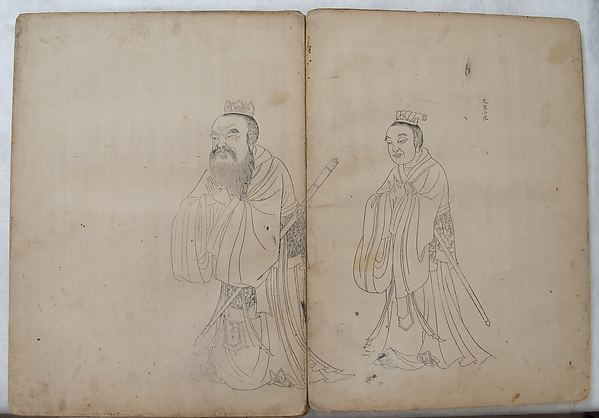
Why Mencius Matters
Mencius matters because he turns Confucian ethics toward moral psychology. Compassion, shame, respect, discernment, and political responsibility become signs of what human beings can become when the right conditions support them.
Mencius is useful on this site because the entry does not isolate a name from its conceptual work. It ties the figure to Ethics, Ren, Yi, Junzi, Xiao, and Mandate of Heaven, then asks what changes when those concepts are read together. That is the difference between recognizing a reference and having a path for further reading.
For searchers, the practical value is orientation. A reader who arrives with the phrase "Mencius human nature and moral sprouts" should leave with a clearer first concept, a better second page, and a warning about the misunderstanding most likely to flatten the subject.
How To Read Mencius
Read Mencius through examples. His famous cases test whether a moral response is already present before calculation has time to take over.
A good first pass is not to memorize every title. Start by asking what problem Mencius is answering, then open one related concept and one comparison or guide. The map matters because philosophy becomes clearer when a name is connected to a question, an example, and a neighboring distinction.
The stronger second pass moves backward. After reading a concept such as Ethics, return here and ask why that concept belongs with Mencius. If the relation is still vague, use the questions below as a diagnostic rather than treating the page as finished.
Historical Placement
Mencius should be placed in time, language, institution, and reception. A figure can enter the encyclopedia because later readers keep using it to solve problems, but the original setting still matters. Terms change when they move from dialogue to commentary, from school practice to classroom summary, or from one language into another.
The safest historical habit is to ask what was at stake before the term became familiar. Was the pressure moral formation, political order, salvation, scientific explanation, interpretation of texts, or the limits of knowledge? That question keeps the page from becoming a museum label. It also helps readers notice why Mencius remains useful without pretending every later use means the same thing.
Reception is part of the story. Later readers may turn Mencius into a system, a foil, a slogan, a method, or a school identity. This page gives the first map, but a careful reader should keep asking which layer is being used: original problem, later interpretation, classroom shorthand, or live philosophical debate.
Concept Map
The most direct path through this page begins with Ethics, Ren, Yi, Junzi, Xiao, and Mandate of Heaven. Each term gives a different handle on the same intellectual neighborhood. Some terms introduce the vocabulary, some locate the historical debate, and some show where readers most often confuse one idea with another.
Use the map as a working guide. Choose one concept that feels familiar and one that feels unfamiliar. The familiar term keeps the page accessible; the unfamiliar term prevents the reading from staying at the level of recognition. Together they make the entry more than a short biography or school label.
If a map feels too broad, read only the first three cards and one hub link. That is enough to see the shape of the problem without turning the page into a checklist. Later visits can add the remaining links and comparisons.
Misreadings To Avoid
Do not read Mencius as saying people are automatically good. The point is that beginnings of virtue require cultivation, social conditions, and political care.
The common mistake is to let the label do too much work. Mencius should not be used as a shortcut for every idea nearby. A careful reader asks which claim is actually being made, which text or tradition supports it, and which related concept would make the point more precise.
This page therefore treats Mencius as a thinker whose work has to be read through problems. It gives a reader enough structure to continue while leaving space for primary texts, historical scholarship, and disagreement among interpreters.
How To Use This Entry
Ask what a passage assumes about emotion, nature, training, and the conditions under which virtue grows.
For study notes, write one sentence beginning with "Mencius helps me see..." and force the sentence to name a concept rather than a mood. Then revise that sentence after opening a related page. The revision is a sign that the page has changed the reader's understanding rather than only adding information.
For essay planning, use the entry as a bridge paragraph. Begin with the role of Mencius, name the related concept that carries your argument, then add the caution that prevents a shallow reading. That pattern keeps the writing from becoming a list of names.
For a second reading, reverse the path. Start with the concept that seemed least central, then ask why it still appears here. If the answer is weak, the relation needs more context. If the answer is strong, the page has become a map of relations rather than a single-line description. That is the level of reading this encyclopedia is trying to support.
For deeper work, compare two entries that look nearby but do different jobs. A figure page may help explain why a concept became urgent; a school page may show why the same concept was practiced, disputed, or institutionalized. Keeping those jobs separate gives the reader a cleaner path into essays, seminars, and self-study notes.
The page is ready to use when the reader can name a concept, a caution, a historical pressure, and a next question without copying the headline. That small test keeps breadth from becoming noise.
When that test works, the entry can support both quick lookup and slower rereading.